
Published Date: 08th Oct, 2026
- Enterprise rental software helps centralize inventory, bookings, contracts, billing, maintenance, reporting, and customer operations.
- Key capabilities to evaluate include multi-location management, scheduling, integrations, mobile access, security, automation, and analytics.
- This blog compares seven rental software platforms, including solutions focused on equipment, asset, activity, and marketplace-based rental models.
- Pricing varies considerably, ranging from recurring subscriptions and transaction-based models to custom enterprise quotes and lifetime licensing.
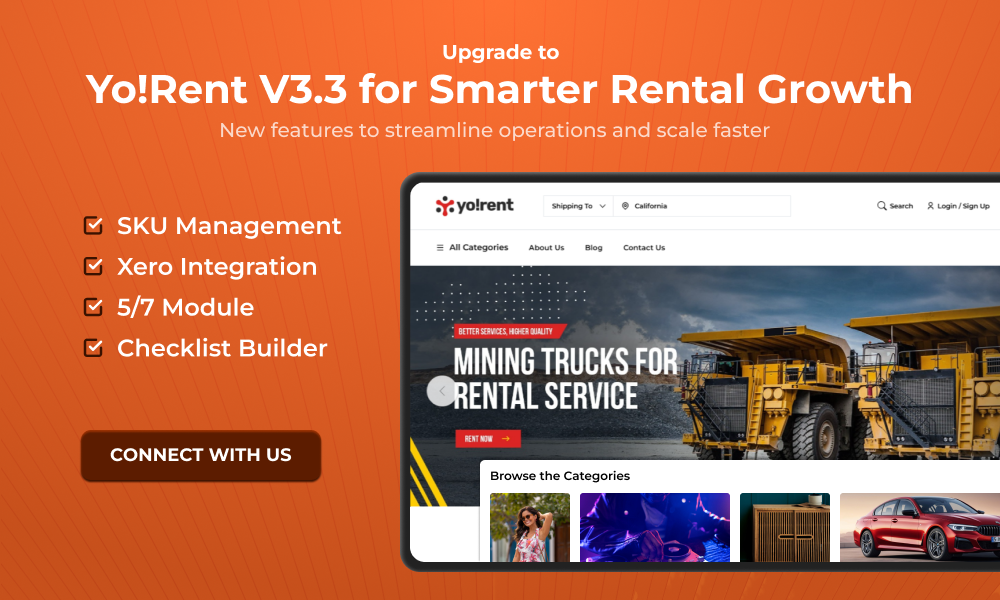
- YoRent is also covered as a customizable option for businesses building online rental operations or marketplace-based rental models.
Enterprise rental businesses need more than a basic booking calendar or inventory tracker. As rental operations expand across locations, customers, assets, employees, and sales channels, managing these activities through spreadsheets or disconnected applications can become inefficient.
Enterprise rental software brings core operations into a centralized system, enabling businesses to manage inventory, reservations, contracts, billing, maintenance, customer relationships, reporting, and integrations from one platform. It can also support multi-location operations, workflow automation, mobile access, and increasing rental volumes.
This guide explores the key capabilities enterprises should consider when evaluating enterprise rental software and compares seven platforms based on their features, enterprise capabilities, supported use cases, integrations, scalability, and available pricing information.
Table of Contents
Key Features to Look for in Enterprise Rental Software
Enterprise rental software should support the complete rental lifecycle, from inventory availability and reservations to contracts, payments, returns, maintenance, and reporting. Businesses should also consider scalability, multi-location management, integrations, user permissions, mobile accessibility, security, and automation.
The right combination depends on the company’s rental model, asset volume, locations, workflows, customer requirements, and long-term growth plans.
Given below are some essential features that have been categorised as per their functioning:
1. Inventory, Booking, and Scheduling
- Rental Inventory Management:
Centralize asset data, availability, rental status, locations, SKUs, condition records, and rental history to improve inventory visibility and utilization.
- Online Booking and Reservations:
Allow customers to check availability, select rental periods, make reservations, and pay online while synchronizing booking data with back-office operations.
- Availability and Resource Scheduling:
Coordinate reservations, asset preparation, deliveries, pickups, and returns while helping teams allocate resources and minimize scheduling conflicts.
2. Rental Operations and Financial Management
- Contract and Agreement Management:
Create and manage digital rental agreements, signatures, deposits, extensions, renewals, cancellations, and supporting documents throughout the rental lifecycle.
- Automated Billing and Invoicing:
Automate rental charges, deposits, extensions, late fees, taxes, discounts, invoices, payments, and reconciliation to reduce manual financial processes.
- Multi-Location Management
Manage inventory, transfers, pricing, availability, customers, permissions, and reporting across branches, warehouses, stores, or rental locations.
3. Asset Maintenance and Field Operations
- Maintenance and Service Management
Track inspections, repairs, servicing, work orders, downtime, parts, and asset conditions while connecting maintenance status with rental availability.
- Mobile Access
Enable employees to manage inspections, check-ins, inventory updates, deliveries, work orders, signatures, and other rental activities from mobile devices.
4. Reporting, Analytics, and Automation
- Reporting and Analytics
Monitor revenue, utilization, inventory, customers, locations, maintenance, contracts, and asset performance through reports, dashboards, and analytics tools.
- Automation and AI
Automate repetitive booking, billing, notification, scheduling, reporting, and maintenance tasks while using AI for analytics, damage detection, and decision support.
5. Integrations and Access Control
- API and Third-Party Integrations
Connect rental operations with accounting, ERP, CRM, payment, eCommerce, GPS, telematics, and business intelligence systems to streamline data exchange.
- User Roles and Permissions
Control what employees can view, create, modify, approve, or delete based on their roles, locations, and operational responsibilities.
6. Security, Compliance, and Data Management
- Security and Data Management
Protect business and customer information through authentication, permissions, encryption, backups, audit trails, hosting controls, data ownership, and compliance features.
Build a Rental Platform With The Right Features
Top Rental Software for Enterprises in 2026
The following rental software solutions were selected based on their rental-specific functionality, enterprise or growth capabilities, inventory and booking tools, multi-location support, integrations, automation, and available pricing information. Because vendors use different pricing models, the two-year cost below is calculated only where a meaningful public calculation is possible.
1. YoRent
YoRent is a comprehensive rental software solution for enterprises looking to launch, manage, and scale online rental businesses, including multi-vendor rental marketplaces across various industries. It provides tools for managing rental listings, bookings, inventory, pricing, payments, and rental orders from a centralized platform. Moreover, the software supports different rental durations, including hourly, daily, weekly, and monthly options, along with flexible payment methods.
Unlike subscription-based rental platforms, YoRent follows a lifetime licensing model, allowing businesses to purchase the software at a one-time cost without recurring software ownership fees.
Key Features
- Rental inventory management
- Online rental bookings
- Multi-vendor marketplace capabilities
- Hourly, daily, weekly, and monthly rental pricing
- Dynamic rental pricing
- Flexible payment options
- Rental order management
- Seller/vendor management
Enterprise Capabilities
YoRent can be considered by enterprises that need a customizable rental software rather than a narrowly defined rental workflow. Its marketplace-oriented architecture can support businesses managing multiple sellers or rental providers, while its lifetime licensing model is relevant to organizations looking to avoid perpetual software subscription fees.
Industries Supported
YoRent can be adapted for rental businesses across categories such as:
- Equipment rental
- Tool rental
- Vehicle rental
- Furniture rental
- Fashion rental
- Camera rental
- Sports equipment rental
- Party and event rentals
- Electronics rental
- Marketplace-based rental businesses
Licensing model: One-time lifetime license
Pricing: 2-Year Cost
Recurring software license fee: $0
Two-year recurring subscription cost: $0
Actual license purchase price: Depends on the requirements
Why Enterprises Consider It
YoRent is a relevant option for enterprises that need greater control over their rental platform, particularly those building customized rental marketplaces or combining rental commerce with multi-vendor operations. Its lifetime licensing model also offers an alternative cost structure to subscription-based rental platforms.
Ideal Business Size/Use Case
YoRent is suited to enterprises, established rental businesses, and marketplace operators looking to build, customize, and scale online rental operations, including businesses with specialized rental workflows.
Build Your Rental Marketplace With Yo!Rent
2. EZRentOut
EZRentOut is rental management software focused on equipment and asset rental operations. It combines bookings, availability, inventory, billing, maintenance, customer management, online rental stores, reporting, and integrations in one platform.
Its Growth and Premium plans have published pricing, while its Enterprise plan uses custom pricing and adds capabilities intended for larger rental operations.
Key Features
- Rental bookings and availability calendars
- Inventory and asset tracking
- Online rental store
- Billing and invoicing
- Customer management
- Maintenance and work orders
- Reporting and analytics
- API integrations
Enterprise Capabilities
EZRentOut’s Enterprise plan adds support for multiple sites, custom integrations, GPS and telematics integrations, item audits, and custom roles.
Industries Supported
- Equipment rental
- Heavy equipment rental
- Tool rental
- Asset rental
- Industrial rental operations
Pricing: 2-Year Cost
Growth: $399/month when billed annually
24-month base cost: $9,576
Premium: $499/month when billed annually
24-month base cost: $11,976
Enterprise: Custom quote
The Enterprise plan should not be assigned an estimated two-year price because EZRentOut does not publish a fixed Enterprise rate.
Ideal Business Size/Use Case
EZRentOut can suit equipment-focused rental businesses seeking online booking, asset tracking, maintenance management, accounting integrations, and multi-site capabilities within a dedicated rental platform.
3. Point of Rental
Point of Rental Elite is built for large and complex rental operations, with capabilities covering inventory, contracts, dispatch, maintenance, purchasing, reporting, eCommerce, mobile workflows, and integrations. The platform supports equipment, event, party, tool, and specialty rental businesses and can be deployed through cloud-hosted or self-hosted environments.
Key Features
- Rental inventory management
- Multi-location operations
- Contracts and reservations
- Dispatch and GPS tracking
- Maintenance and inspections
- eCommerce
- Consumer portal
- Accounting integrations
- Reporting and analytics
- Mobile workflows
Enterprise Capabilities
Elite is explicitly positioned as Point of Rental’s enterprise rental management platform. It supports multi-location operations, customizable workflows, accounting integrations, advanced APIs, mobile functionality, and flexible deployment. Its optional Rental Intelligence Suite adds AI-powered analytics covering areas such as utilization, revenue, repair costs, fleet age, and asset ROI.
Industries Supported
- Equipment rental
- Heavy equipment rental
- General tool rental
- Event rental
- Party rental
- Specialty rental
Pricing: 2-Year Cost
Enterprise pricing: Custom quote
Point of Rental’s Elite pricing depends on fleet size, number of locations, and required modules.
Ideal Business Size/Use Case
Ready to Build Your Enterprise Rental Platform?
4. Rentle
Rentle has been positioned as rental software for equipment and activity-based rental businesses, with functionality around online bookings, inventory, payments, and rental operations. Available software listings have associated the platform with equipment and activity rental businesses, including ski resorts and outdoor rental operators. However, its branding and product positioning have changed over time, so the current offering should be verified with the vendor before publication.
Key Features
- Online rental bookings
- Rental inventory
- Booking calendar
- Availability management
- Online rental store
- Customer information
- Payment handling
- Multi-location capabilities
Enterprise Capabilities
Rentle has been positioned for businesses ranging from smaller rental shops to larger operators, particularly in equipment, sports, outdoor, and activity rental. The platform has been described with capabilities such as real-time inventory availability, online rental stores, barcode scanning, and multi-location functionality.
Industries Supported
- Ski rental
- Bike rental
- Sports equipment rental
- Outdoor equipment rental
- Activity rental
Pricing: 2-Year Cost
Current enterprise pricing: Verify with vendor
Because current public pricing and product positioning are not sufficiently clear to establish a reliable 2026 enterprise two-year cost, this should be listed as Custom/Verify Current Pricing rather than using an outdated figure.
Ideal Business Size/Use Case
Most relevant to equipment, sports, outdoor, and activity rental businesses with online and in-person booking requirements. Current enterprise suitability should be confirmed with the vendor before publication.
5. HireHop
HireHop is cloud-based rental software with functionality for quotes, bookings, stock control, customer management, reporting, and multi-depot operations. Its current pricing page offers Starter, Professional, and Enterprise tiers, with Enterprise positioned for larger hire companies and multi-depot rental operations.
Key Features
- Quotes and bookings
- Stock control
- Multi-depot management
- Reports and dashboards
- Customer management
- Advanced permissions
- Multi-currency
- ERP integrations
Enterprise Capabilities
HireHop’s Enterprise plan includes advanced permissions, migration support, sandbox accounts, CDC data replication, multi-currency, ERP integration, custom integrations, and dedicated support.
Industries Supported
- Equipment hire
- Event equipment
- Production equipment
- General rental operations
Pricing: 2-Year Cost
Professional: £46/month for the first user + £23/month per additional user
Enterprise: POA/Custom Quote
For example, HireHop currently shows 10 users at £253/month under Professional. A 24-month calculation at that displayed rate would be £6,072, but this should not be presented as an Enterprise price. Enterprise pricing is provided on request.
Ideal Business Size/Use Case
Suitable for growing and larger equipment-hire companies, particularly those operating across multiple depots and requiring advanced permissions, integrations, and centralized rental workflows.
6. Rentrax
Rentrax is rental and tour management software with features covering bookings, inventory, scheduling, payments, multi-location operations, reporting, permissions, maintenance, and mobile access. Its pricing is transaction-based, with all features included across plans and the applicable plan determined by usage.
Key Features
- Online booking and checkout
- Inventory management
- Availability calendar
- Multi-location support
- Scheduling
- Maintenance and usage monitoring
- Reports
- Roles and permissions
- Mobile access
Enterprise Capabilities
Rentrax supports multiple locations, unlimited users, role and permission controls, scheduling, inventory, payment workflows, and reporting. Its Premium plan has no revenue limit and includes 3,000 transactions, with additional transactions charged at the published overage rate.
Industries Supported
- Equipment rental
- Tour and activity rental
- Recreation rental
- Multi-location rental operations
Pricing: 2-Year Cost
Current published base plans are:
- Starter: $29/month
- Growth: $169/month
- Advanced: $449/month
- Premium: $999/month
A simple 24-month base calculation gives:
- Starter: $696
- Growth: $4,056
- Advanced: $10,776
- Premium: $23,976
Ideal Business Size/Use Case
Suitable for rental and activity businesses that want a transaction-based pricing structure, multi-location support, and a broad set of operational features without per-user pricing.
7. Texada
Texada provides rental, service, financial, mobile, and asset management capabilities for equipment-focused rental businesses. Its platform supports reservations, contracts, asset staging, check-in/check-out, maintenance, work orders, delivery, billing, and mobile operations.
Key Features
- Rental reservations
- Contract management
- Asset management
- Check-in/check-out
- Mobile inspections
- Work orders
- Maintenance management
- Delivery and pickup scheduling
- Financial workflows
- eCommerce and integrations
Enterprise Capabilities
Texada supports complex workflows involving counter teams, drivers, mechanics, logistics managers, and service teams. Its platform includes location and division controls, role-based permissions, mobile workflows, asset management, and integrations. In 2026, Texada also added AI-powered damage detection to its Service & Rental Mobile application.
Industries Supported
- Equipment rental
- Heavy equipment rental
- Industrial equipment
- Construction equipment
- Service-oriented rental businesses
Pricing: 2-Year Cost
Enterprise pricing: Custom Quote
Ideal Business Size/Use Case
Best suited to established equipment rental businesses with complex asset, service, logistics, and financial workflows.
Take The Next Step Toward Building Your Rental Marketplace
Enterprise Rental Software Comparison
The table below provides a high-level view of the major capabilities and pricing models of the platforms covered above.
| Software | Best For | Multi-Location | Inventory | Online Booking | Asset Tracking | Integrations |
| Yo!Rent | Customizable rental & marketplace businesses | Yes | Yes | Yes | Yes | Yes |
| EZRentOut | Asset rental | Yes | Yes | Yes | Yes | Yes |
| Point of Rental Elite | Complex rental operations | Yes | Yes | Yes | Yes | Yes |
| Rentle | Sports & activity rental | Yes | Yes | Yes | Yes | Yes |
| HireHop | Equipment hire & multi-depot operations | Yes | Yes | Yes | Yes | Yes |
| Rentrax | Multi-location rental & activity businesses | Yes | Yes | Yes | Yes | Yes |
| Texada | Rental & service operations | Yes | Yes | Yes | Yes | Yes |
Note: Actual costs can vary according to plan, users, transactions, overages, modules, setup, integrations, and other vendor-specific charges.
Enterprise Rental Software vs. Standard Rental Software
Enterprise rental software generally provides deeper controls, integrations, reporting, and scalability than software designed primarily for small rental operations.
However, the distinction depends on the vendor and the business requirements.
| Capability | Standard Rental Software | Enterprise Rental Software |
| Inventory | Basic | Advanced |
| Locations | Limited | Multi-location |
| Users | Small teams | Large teams + permissions |
| Integrations | Limited | Extensive APIs/integrations |
| Reporting | Basic | Advanced |
| Automation | Limited | Extensive |
| Scalability | Moderate | High |
| Asset Tracking | Basic | Advanced |
| Contracts | Basic | Advanced |
| Analytics | Basic | Advanced |
| Security | Standard | Enterprise-grade controls |
| Customization | Limited | Extensive |
For example, enterprise-focused software such as Point of Rental Elite provides multi-location control, advanced integrations, mobile workflows, reporting, maintenance, and customizable deployment options. EZRentOut’s Enterprise tier similarly adds multi-site support, custom integrations, GPS/telematics, and custom roles.
Launch A Customizable Enterprise Rental Platform
Conclusion
Choosing enterprise rental software is about finding a solution that can support current operations while allowing room for future growth. Businesses should evaluate capabilities such as inventory management, multi-location operations, reservations, contracts, billing, maintenance, integrations, reporting, security, and automation.
The software solutions covered in this guide take different approaches to rental management. Some focus primarily on equipment and asset rental, while others are designed for complex multi-location operations. Platforms such as Yo!Rent support customizable rental businesses and marketplace-based models.
For businesses seeking a flexible platform to build online rental marketplaces, YoRent is one option to consider. Its lifetime licensing model provides a different cost structure from subscription-based platforms.
Before making a decision, enterprises should assess their workflows, integration needs, implementation requirements, scalability, support, customization options, and total cost of ownership rather than focusing only on advertised starting prices.
FAQs About Enterprise Rental Software
What is the best rental software for enterprises?
There is no single rental software that fits every enterprise. The appropriate choice depends on factors such as the rental business model, number of locations, inventory size, asset complexity, booking volume, integrations, customization requirements, and budget. Compare each platform against your actual operational requirements rather than choosing a rental software based only on feature lists or starting prices.
How much does enterprise rental software cost?
Enterprise rental software follows different pricing models, including monthly subscriptions, per-user pricing, transaction-based pricing, custom enterprise pricing, and one-time licensing. For example, EZRentOut and HireHop use custom enterprise pricing, Rentrax uses transaction-based pricing, while Yo!Rent follows a lifetime-license model with a one-time cost.
Can rental software manage multiple locations?
Yes, many enterprise-oriented rental software solutions support multiple branches, stores, depots, warehouses, or divisions. Depending on the platform, this may include centralized administration, location-specific inventory, transfers, availability, permissions, pricing, and reporting, helping businesses maintain greater visibility across their rental operations.
How long does enterprise rental software implementation take?
Implementation time depends on the number of locations, inventory size, data migration, integrations, custom workflows, employee training, and deployment requirements. A straightforward rollout may take less time than an enterprise implementation involving multiple systems, locations, and customized operational processes.

Ready to Take Your Rental Business Online?
Get In Touch